 By JESSICA DEABREU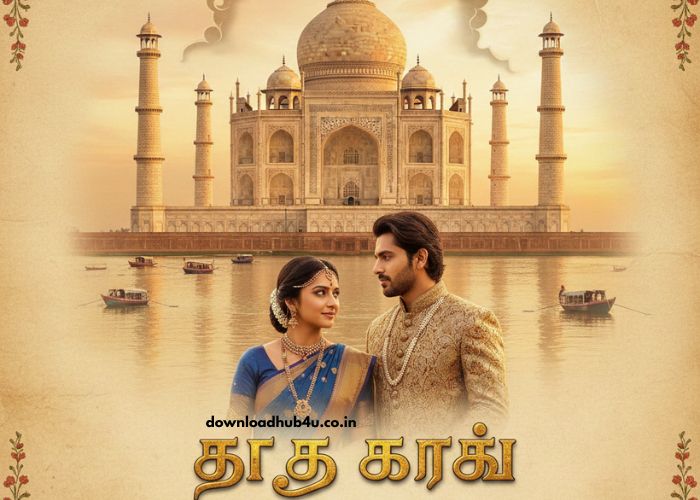
| Category | Details |
|---|---|
| Movie Title | The Taj Story |
| Language | Hindi |
| Genre | Courtroom Drama, Historical Mystery |
| Director | Tushar Amrish Goel |
| Producer | Swarnim Global Services Pvt. Ltd. |
| Writer | Tushar Amrish Goel |
| Main Cast | Paresh Rawal, Namit Das, Zakir Hussain, Amruta Khanvilkar, Sneha Wagh |
| Cinematography | Satyajit Hajarnis |
| Runtime | 165 minutes (2 hours 45 minutes approx.) |
| Release Date | 31 October 2025 |
The Taj Story is a 2025 Indian Hindi‑language film written and directed by Tushar Amrish Goel and produced by Swarnim Global Services Pvt. Ltd.The movie features a prominent cast including Paresh Rawal in the lead role, along with Zakir Hussain, Amruta Khanvilkar, Namit Das and Sneha Wagh.
The film runs for approximately 165 minutes (about 2 hours 45 minutes). It released theatrically on 31 October 2025.
At its core, The Taj Story is structured as a courtroom drama with strong historical‑mystery leanings. The film seeks to raise controversial questions about the origins of the Taj Mahal challenging the widely accepted narrative and presenting an alternate perspective.
Plot Synopsis
The story centers on Vishnu Das (Paresh Rawal), a veteran local guide at the Taj Mahal. For decades, he has shown tourists around, sharing the commonly known history of the monument. However after a drink‑fueled conversation captured on video Vishnu shockingly admits that much of what he has told tourists may be inaccurate. His confession goes viral. As a result, he is fired from his job, and his son Avinash (portrayed by Namit Das) also suffers the consequences.
Driven partly by guilt and partly by a desire for truth, Vishnu embarks on a quest to challenge the accepted narrative. With legal help, he files a Public Interest Litigation (PIL) in court aiming to prove that the Taj Mahal’s history has been distorted, and that the monument may have very different origins than what is believed.
The trial becomes the heart of the movie: witnesses, expert testimonies, heated courtroom debates. On one side stands Vishnu and his allies arguing for the revisionist theory; on the other, opposing lawyers and historians attempt to defend the conventional history. Through the proceedings, the film delves into questions of heritage, memory, historical narrative, identity, and collective belief whether a monument’s meaning is set in history or perceived truth.
Reception, Criticism, and Controversies
When The Taj Story released, it sparked immediate debates and mixed reactions. On one hand, some viewers praised the film for daring to question long‑accepted beliefs. On social media, many shouted out to the performance of Paresh Rawal and welcomed the film’s attempt to encourage viewers to “rethink history.”
On the other hand critics and historians were largely unconvinced. Many reviews pointed out serious flaws: weak writing, repetitive courtroom scenes, heavy-handed monologues, and a lack of subtlety. The film was accused of serving as a platform for controversial and historically unverified theories about the Taj Mahal rather than balanced exploration.
More than just cinematic criticism, the film also stirred social backlash. Some viewers and commentators argued that by presenting a contentious revisionist take on a monument deeply tied to India’s pluralistic heritage, the film risks fanning communal tensions.
Yet, defenders of the film including its makers argue that The Taj Story does not promote religion, but simply attempts to present an alternate historical perspective. The director and cast have publicly clarified that their intent was to raise questions, not to draw religious divisions.
In sum: the film stands as a polarizing entry in 2025’s Bollywood slate one that provokes thought in some, discomfort or anger in others.
Critical Verdict: What Works – and What Doesn’t
What works
-
The film’s cinematography (by Satyajit Hajarnis) and visuals have been praised. Shots of the Taj Mahal (marble, reflections, architecture) are reportedly beautiful and atmospheric harnessing the monument’s grandeur to add weight to the narrative.
-
The premise questioning accepted narrative and inviting debate has emotional and intellectual potential. In principle, such films can challenge viewers to reflect on history, legacy, and collective memory.
-
Performance-wise, Paresh Rawal brings gravitas to Vishnu Das, giving the central character sincerity and earnestness that helps hold audience attention at least in the film’s first half.
How to Watch – And Why Legal Viewing Matters
Because The Taj Story is a recently released theatrical film (2025), the only fully legitimate way to watch it is through officially licensed distribution channels: cinema screenings where available, or later through authorized theatres, digital streaming platforms, or DVD/ Blu‑Ray releases once they are made available.
Avoid illegal download or piracy websites not only is downloading copyrighted films without permission unlawful in most countries (including India and Bangladesh), but such copies often come with poor video quality, security risks (malware, phishing), and they deprive artists and creators of rightful revenue.
If you wish once the film becomes legally available, you can explore streaming services or legitimate rental/purchase options.
Conclusion
The Taj Story aims high: it tries to confront accepted history, spark debate, question narratives, and challenge collective memory. It offers strong visuals and a committed performance from its lead. But in its execution heavy-handed courtroom drama, shaky writing, and historically disputed claims it ends up as a flawed attempt.